Friday, November 18, 2016

Preparing to Read


Lately, I have been reading the book "Teaching Reading to Children with Down Syndrome". Even though Chelsea doesn't have Down Syndrome, she learns in a similar way, and it has TONS of great ideas!

Here are some tips they gave in preparing your child to become a reader:

1. MODEL reading! Show your child that you read for pleasure as well as to learn new things. Let them see you reading, and take them frequently to the library.


2. Provide reading material! Let age-appropriate books to be easily accessible to your child. (A note from me- be ready for and okay with casualties. This is why I only buy used books- it is easier to say goodbye to a 75 cent book than a new $10 book. Encourage them to look at and experience books!)


3. Read with them! All parents know this one. I read to my kids for at least half an hour a day, and have since Chelsea was born. They LOVE books! They associate them with happy times with mom.


4. Sing nursery songs with them! Recite poems, sing songs- these teach rhyming! It is about lots more than humpty dumpty on a wall!


5. Shape boxes! These are great early toys that teach kids to match shapes and become aware of the importance of the shape something has.


6. Play with puzzles! This also teaches to match shapes (the early, single shape puzzles), discrimination, and to look for the big picture (like a word versus a letter!)


7. Provide a large writing surface the child has unlimited access to. We used a big whiteboard easel, and multi-colored dry erase markers. Also use paper and markers, crayons, colored pencils, paint- anything to promote drawing/ writing!


8. Have blocks, toy animals, cars, little people- use these to build and play zoo, farm, garages, roads- anything to act out what they are reading about


9. Have dolls, stuffed animals, tables, chairs, tea set... Housekeeping play toys. These are for practicing interactions, pretend play, learning the use of objects, and all about family relationships, roles, etc.


10. Dress-up, pots and pans, boxes, sensory bins. Again, more of acting out what they read about, because kids learn by DOING!


11. Watch reading shows! The book recommends Sesame Street, but we like Super Why the best. Just use your screen time for good shows!


12. Experience the community with purpose! Meaning- give your child a goal, so have a list for them when you go to the store (use pictures and words!), do an animal scavenger hunt at the zoo, bring a picture for grandma to the post office to mail it, etc.

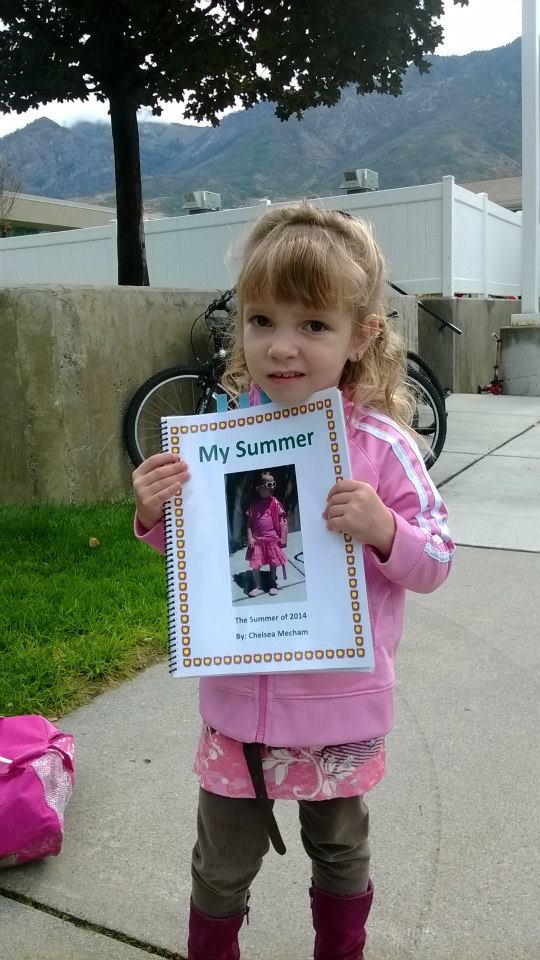
13. Make books about your child! (Not in the book I have been reading, but Chelsea loves this) I just use Word and put in pictures about Chelsea, or have her choose her ABC Disney Favorites.

Remember: Your child will learn what you teach them, so make sure you are teaching them things that are meaningful and useful!

Tuesday, November 15, 2016

Life Skills

Imagine for a moment that you are completely unable to care for yourself. Someone has to dress you every day, change your diaper, make your food, brush your teeth, do your shopping... Wouldn't you be desperate for any amount of independence? This is comes when life skills are taught!!!! I want Chelsea to be able to live as independently as possible, and I will absolutely help her to get to that point!

Here is a list of a few things I am working with Chelsea on so she can learn to be more independent!


1. Personal hygiene! Washing hands correctly and frequently, toileting, bathing herself, and brushing her teeth.


2. Dressing and Undressing. Buttons and zippers are hard! We use various busy bags and a Minnie Mouse skills board to practice, as well as some different buttoning activities. We also have her dress and undress herself as often as possible, and she is getting better!


3. Following directions! I alternate this one a lot- give verbal directions "Spin around, sit down, then go find your shoes", and picture directions in list form, like visual prompts for washing hands, or making a peanut butter jelly sandwich


4. Budgeting! Right now, we keep it very simple; we have a picture list of chores she can do to earn money, then when we go to the store, she can find something she wants, we take a picture, and she can save up. It gives us an awesome way to practice counting and for her to learn to save and make purchases by herself!  
Chelsea at age 3


5. Say her name, address, and phone number. Right now, I have a lanyard she can hand to someone if she is lost, and I just put it on her whenever we leave the house. Luckily, we haven't had to use it in an emergency, but I still try and get her to practice.


6. Making purchases. Chelsea will need to find what she is looking for in the store, bring it to the cashier, make sure she has enough money, and pay for it. And when she is so cute and little, most people and cashiers are very patient with her!
One day I will get this project done for her!


Later on: There are lists and lists on this topic, some that I plan on teaching Chelsea later will be things like managing personal health (cooking, exercise, basic nutrition), pet care, calling 9-1-1, eating out, doing laundry and dishes, using public transportation, doing her hair and makeup, etc. Sooo many things to learn!


Friday, November 11, 2016

SATB2 Study in English

I was so, so, SO excited to see that there is a new SATB2 study, authored by the geneticist that is involved with creating our SATB2 database!!! Here is the link.

And jargon-speak can sometimes be difficult to understand, so here are 7 points made in the study... in plain English:

1. I LOVED the acronym they came up with for SATB2, all about the main characteristics of our cuties!


2. "Glass Syndrome" and "SATB2 Associated Syndrome" are the same thing. Really, no difference. All the kids will present with similar symptoms regardless of size of deletion/ mutation/ duplication/ frameshift

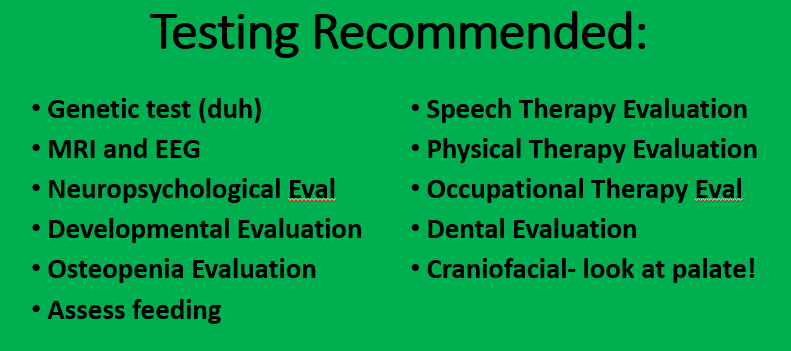
3. They give a recommendation for treatment for SATB2!!!! (See Table II on Page 8) Super easy to read!


4. SATB2 Syndrome will usually present with: intellectual disability (NOBODY say the "R" word), absent or limited speech, palate and dental problems, overall developmental delay, behavior issues, and possible seizures and osteopenia.
All these things, from one tiny change!!!


5. They made mice with SATB2 Syndrome, and the mice that lived (many died) had similar symptoms as the humans with the same syndrome


6. SATB2 has some effect in brain development (not yet fully researched), which indicates defects in the corpus callosum.
The corpus callosum "connects" things in the brain, from one hemisphere to the other

7. It has been suggested that the SATB2 gene acts as a tumor suppressant (because elevated levels of the SATB2 protein have been seen in tumors, the guess is that the body sends it in to fight cancer), but since no cases of an SATB2-affected person with cancer have been recorded, this remains an unanswered question about the affect of abnormalities on the SATB2 gene in relation to cancer.


Wednesday, November 9, 2016

Career Ideas

I know I am thinking WAY ahead here, but I want to list things I can do now and in the upcoming decade to help Chelsea get ready for employment! Because I believe everyone has something to contribute! Everyone has talents and interests, and can add value to society! There are tons of job opportunities, even if they never learn to read, write, or talk!


1. Explore animals! Would she want to do a dog-walking business? Work on a farm or ranch? Try to play with other pets, visit the farm and zoo, read books and sing songs, and later volunteer at animal shelters or the pet store.


2. Explore the arts! Go to plays, visit art museums, watch dance companies, try a dance or painting class, listen to music, lots of options! Maybe later she will want to be a model or costume coordinator!


3. Explore outdoors! Does she like fishing? Gardening? The mountains or forest? Playing outside on the playground? Later on, she could be a flower arranger or something in the parks department!


4. Explore foods! Try different foods, make different food, put together picture recipes and see if she can follow those instructions! Does she want to work at a restaurant? A grocery store?

5. Have Fun!!! Does she love books? Games? Movies? Shopping? Would she want to help re-shelve books at the library, or volunteer with early intervention respite and play games with the kids? How about making popcorn at the movie theater? Or folding clothes at a retail store?


There are SO many choices!!! Starting at age 16, a transition plan should be a HUGE part of every IEP!!! We need to prepare our kids (non-disabled and disabled alike!) for the "real world", rather than succeeding in an educational vacuum.


What will make YOUR child happy and go on to lead a fulfilled life? So explore different avenues! Try out volunteer work early on so they can get a feel for what they like! Everyone can contribute!


Saturday, November 5, 2016

Dental Work

One of the most obvious parts of SATB2 Associated Syndrome is abnormal teeth (overly large teeth, poor quality, short roots, missing adult teeth, crowding...). So having a good dentist is crucial! Chelsea really likes her dentist! He is patient and funny and she will cooperate with him for check-ups, but not so much for cleaning.


In order to get any dental work done, she has to be knocked out. BUT- the dentist won't do it at his office because of her seizure disorder, so we need to go to the hospital, AND the hospital our insurance is accepted at only gets a visit from this dentist once a month. *sigh* But we special needs moms are used to it, right?

The Prep
1. Take a bath and remove all nail polish the night before. I also braided her hair to make leaving the house easier for hospital day. Just up, go potty, get out the door!


2. Nothing to eat or drink (except seizure medication) starting at midnight the night before.
3. Pack a special blanket, toy, and extra clothes. Bring photo ID and insurance card, as usual.
Special toy and blankie are important!


4. Don't get sick!!! We had to cancel before because Chelsea had a cold, and they won't put her under anesthesia unless she is healthy, since kids have tiny windpipes. I've had her on extra-good probiotics for a month to reduce the possibility of illness.

The Procedure
1. Get registered and checked in, which is usually really early since the little kids haven't eaten. We were there at 5:30 am. Woohoo!!!

2. Get measured and weighed (for anesthesia and record-keeping purposes)


3. Get changed into hospital clothes. (Remember to bring in those extra clothes, because anesthesia sometimes makes kids lose their bladder control!)


4. Doctors and nurses will check to make sure you are healthy! When Chelsea had a cold before, we were sent home at this point; a mucus-y throat can make you stop breathing in the middle of the procedure. Eek!
Chelsea was SOOOO happy!

5. The doctors and nurses ask questions to Mom, then take Chelsea to surgery!!!


The Recovery
THIS was the super sad part!!!! When kids wake up from anesthesia, they are really sad and grumpy. Chelsea was too, very different from her normal, cheerful self!


1. Keep them hydrated!!!! Try to get fluids in them as much as possible! Remember- the colder the better, so popsicles, juice, ice cream, bingo!!! The doctor also recommended Pedialyte. And NO STRAWS!!! We don't want any dry sockets!


2. Take a nap!!! They will be tired after the procedure, and grumpy too! Taking a nap helps reset their mood- worked great for Little Miss! We went home and napped for 2 and a half hours! (Be sure you don't let them fall asleep in the car on the way home and their head droop down- their airway can be blocked that soon after surgery)


3. Try to stick to bland, soft foods to make chewing easier. Kids usually don't want to open their mouths. Soft mashed potatoes, applesauce, mac and cheese... (I am wondering if Chelsea's teeth were hurting her before, because she didn't follow this expectation- she started devouring anything and everything in sight!)


4. Alternate Tylenol and Ibuprofen every 3-4 hours. Their mouths will hurt, and their throats will too, from the breathing tube! It can take several days to heal; Chelsea was fine after the day of surgery though, with only one complaint of pain before bed the next day.


5. Adult supervision needed for 24 hours after surgery- balance and coordination may be off, so falling could happen.

6. Watch for throw-up! Once is considered normal (though Chelsea didn't), but any more than that, call the doctor ASAP

Good luck!!!

Tuesday, November 1, 2016

Dream Big

I believe that Chelsea can do anything! I don't understand why people assume persons with disabilities are incapable- there are sooo many things they CAN do, and probably better than the rest of us!!! 


Yes, there is the point of practicality. Will Chelsea ever be a surgeon or lawyer? Probably not. BUT that doesn't mean that she cannot contribute! Every person has something they can do to add value to the world and give themselves a fulfilling life! Think outside the box!


I am in a disability advocate course, and this week's unit is about transitioning to work life, and the various possibilities. Unfortunately, most everyone working with people with disabilities assumes they will be janitors, nothing more. But even if a person cannot speak, write, read, or do math, there are plenty of job opportunities for them! Think of what your child likes to do best, and then list possibilities related to that job.


Some case studies we looked at:

1. Brian is destructive. He is constantly breaking things, so got a job breaking down boxes part time.

2. Susan loves eating pizza and enjoys being in pizza restaurants. She gets a job wrapping silverware in napkins, and eating pizza during breaks.

3. Freddie loves football and watching it get played. He is in charge of the towels during football season.

4. Teresa likes animals, and works on a farm collecting eggs and feeding the goats

5. Samantha loves fashion- flashy, fancy clothes, hats, and shoes. She works at a theater, getting costume changes ready for the actresses.

Each of these people love their job and it is related to what they enjoy! Speech, reading, and writing are required for none of them, and I think they have more fulfilled lives than if they wiped tables they had no interest in.


Also, if your child wants to clean for a living because they value tidiness and enjoy straightening up, that is FANTASTIC!!! The whole idea of having a person-centered life plan is for the PERSON to be at the center, for them to have an opportunity to do what they love!


Right now, my job is to let Chelsea explore all possibilities of what she might like- art, farm life, theatre,  the city, music, animals, sports, restaurants, fashion... We will read books, watch youtube videos, sing songs, go on outings- let her develop her own interests and loves, then once she is a little older, we will take her to volunteer at different places, and find a job in the field that she is passionate about.


To thrive, a person needs to feel like they are adding value, that they are living their own life, and not following a program they have no say in. Everyone should have happiness in their life!