The last blog was on the first 3 days of potty training. From here on out, it gets easier time-wise!
Day 4: Take child potty every 10 minutes and every time they ask. That means we try potty, then start the timer just as we finish.
Day 5: Take child potty every 15 minutes and every time they ask.
Day 6: Take child potty every 20 minutes and every time they ask.
Day 7+: Take child when they ask to go potty.
If they don't recognize the potty signs by now, then stop at every 20 minutes and continue to do that until they get it. Days 4 and 5 were the WORST for us potty training! It seemed that any time we tried potty, she would have an accident about 1 minute after an attempt. So. Much. Laundry.
The goal here is to still keep a 100% positive attitude, with no negative reactions to accidents. Keep any reaction to an accident neutral (quietly clean it up), and then praise and reward attempts at potty-ing.
Honestly, I am a pretty positive person by nature, and I struggled a lot! I called my dad and sister and cried to them and said it was too hard. But they both told me to not give up, and to remember how much we had already done. That was the biggest motivator for me not throwing in the towel- I didn't want to have to repeat those 3 days of living in the bathroom!
Note: If your child is on seizure medication, MAKE SURE they aren't late on any doses or miss any. Any time we were late and the two times we missed (in the 2 months since starting potty training), those times corresponded exactly with the days that she had multiple accidents.
Note #2: The thing that helped CHelsea most to understand the concept of going potty was pouring warm (not cool, not hot, not cold) water over her to give the sensation of peeing.
Note #3: No pull-ups in the house! Yes there will be accidents. And messes. But pull-ups are too much of a regression when worn all the time. We did use them on some outings though, but she usually keeps them dry.
Wednesday, April 20, 2016

Sunday, April 3, 2016
Potty Training: The First 3 Days

I based what I did of the RTT (Rapid Toilet Training) method. It is a very intense method, geared mainly for children with developmental delays or autism.
The first 3 days the most involved part, because you stay in the bathroom the whole day, except for 5 minute walks. Hopefully any other kids are shipped off to family, because you will have absolutely zero time for them.
Most of the first day, we spent with Chelsea sitting on the potty (only dressed waist up). She would sit for 30 minutes, then have a 5 minute break. Once she went in the potty, she got a break right away, plus a prize and lots of praise, singing, the whole 9 yards.

Once she was successful, we moved to sitting for 25 minutes with a 10 minute break, and so on down to sitting for 15 minutes. But I kept the breaks at 5-10 minutes because she was peeing a LOT (remember those drinks and salty snacks?) when we had any longer of breaks.
All the Potty Activities we did were geared so that they could all be done sitting down on the potty and be so motivating that Chelsea would want to continue sitting.
During breaks, Chelsea would start to pee, so I would hurry her onto the potty, and if a single drop of pee got in before she finished, I counted it as a success.
The goal here is 100% positive attention! If there is an accident, give a neutral reaction- "Pee-pee goes in the potty" in a neutral voice, and clean it up silently. Then go back to very positive interactions with sitting and going on the potty.

Tips:
- Either get a tight shirt (really, really tight) or a baggy shirt that you tie tight around your kiddo's middle. Two goals here: first- this helps them feel what is going on inside better, and second- it helps to not have that little bottom covered at all. You will be watching that rear end nonstop on their breaks from sitting
- The goal for the first day was for Chelsea to recognize that she was peeing when she was going by me labeling
- The goal for the second day was for Chelsea to label that she was going potty before she was done
- The goal for the third day was for Chelsea to label that she was going potty as she is starting to go potty
- Mentally prepare yourself. The days will be looooooong
- Record everything! Even on really difficult days, it was nice to see that Chelsea's success percentage was increasing over time

Potty Training: Activities
Activities:
This is a list of all the activities we did. I kept a log and every 15 minutes, changed up the activity, unless she
was really enjoying it, which I put in the “favorites”. I also tried to do lots
of activities that involved blowing on something, because that uses the same
muscles as going potty! We also saw "Potty Time" once or twice a day.
FAVORITES:
-
Princess Themed Memory Game
- Magnetic Princess Dress-up (Ariel, Elsa, Anna, Belle, Cinderella each had 15 minutes)
- Reading books, especially potty books!
- Melissa and Doug Princess puffy reusable sticker castle set
- Using flashlight to find speech target words

Other fun activities:
-
Build a straw and blow bubbles in drinks
- Paint nails
- Do hair
- Blow up balloons
- Hanger ABC game- ABCs written on clothespins, and we clip the pins onto a hanger in order, or spell words

- Sing princess songs
- Use party blower/ noisemakers
- Scratch off drawings
- String beads to make a princess bracelet
- Craft stick name puzzle match

- Silly String Sensory Play
- Princess coloring book
- Princess flash cards
- What can we do with an expandable tube? (Make a crown, play telephone, expand and compress, play basketball, etc)

- Dance party to celebrate potty success!
- Stick stickers on paper! (Works that fine motor!)
- Puzzles, either by themselves or in a sensory bin
- What Am I thinking of? (I had a list of 100 of Chelsea’s favorite things- characters, foods, sports, activities, etc. and would give clues)
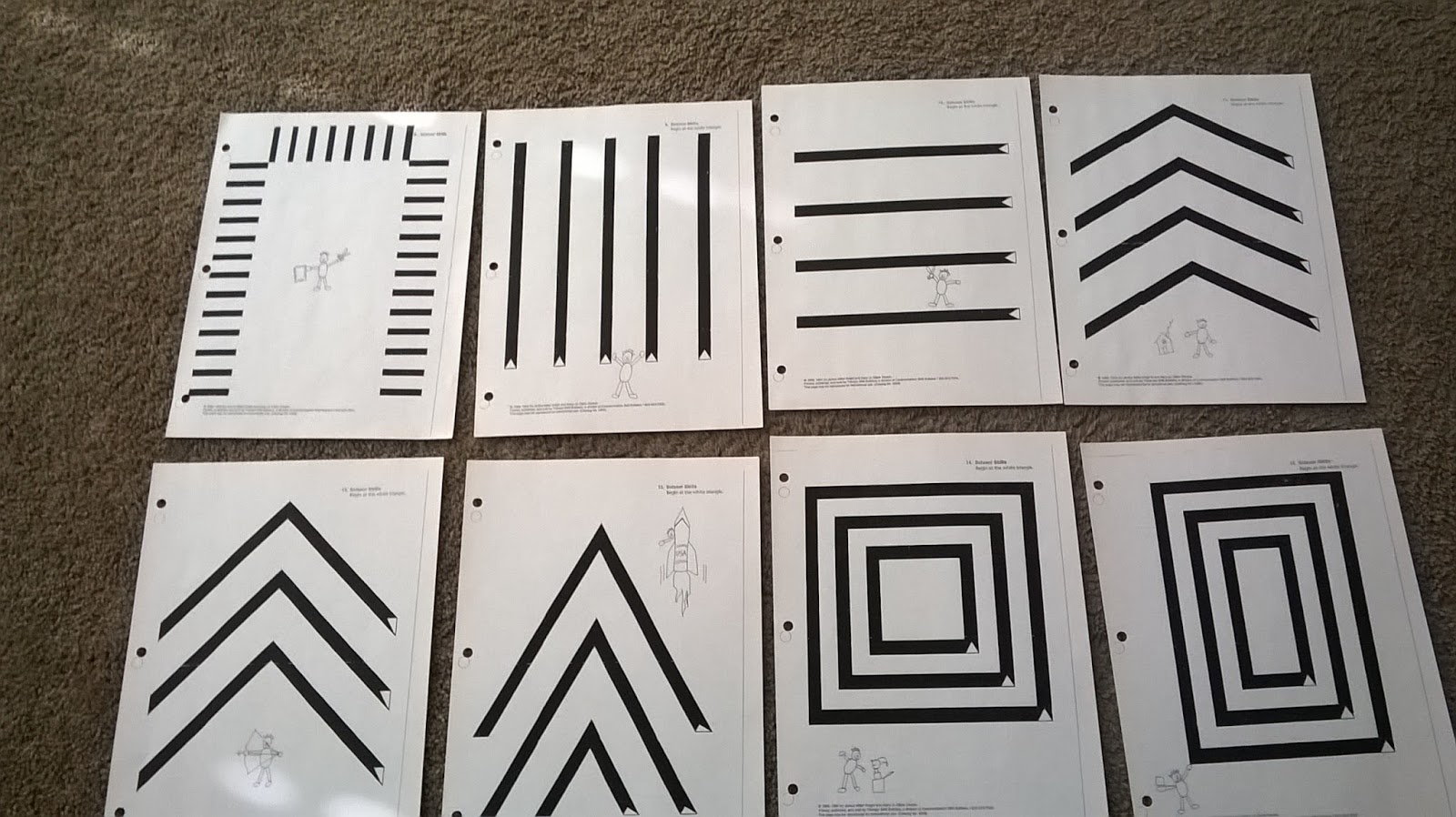
- Cutting activities! I had different papers with a variety of lines, and had Chelsea try to cut on the lines
- Paint in a bag! This was super fun! Put a few globs of paint on a paper, then slide the paper into a gallon Ziploc bag. Painting without any mess!
- What is the sign for ____?
- Shine flashlight- can you find Mommy’s/ Chelsea’s elbow? Knee? Chin? Etc
Sunday, March 20, 2016
The Cost of a Special Needs Child
This is why special needs parents laugh when you tell them to
take time for themselves! And this is just what our family is supposed to be doing for Chelsea- it doesn’t include ABA for
autistic kids, or wheelchairs, or other things.
Grand Total= $1,825 monthly (not including any extra doctor visits, specialist tests, EEGs, MRIs, genetic testing/ counseling, costs for therapy supplies, etc.)
Grand total in time conservatively needed daily for your child= 10 hours 30 minutes
Things not necessarily
covered by insurance:
3-5 sessions of speech therapy weekly= $600/ month
1-2 sessions of occupational therapy weekly= $400/ month
Seizure medication= $125/ month
1 session physical therapy weekly= $325/ month
Adaptive Gymnastics= $50/ month
Allergy-free diet= $250/ month for just her
Vitamins, fish oil, supplements= $75/ month
Seizure medication= $125/ month
1 session physical therapy weekly= $325/ month
Adaptive Gymnastics= $50/ month
Allergy-free diet= $250/ month for just her
Vitamins, fish oil, supplements= $75/ month
Grand Total= $1,825 monthly (not including any extra doctor visits, specialist tests, EEGs, MRIs, genetic testing/ counseling, costs for therapy supplies, etc.)
Now add on rent, utilities, food for the rest of the family,
gas, and all the rest of your monthly budget
Others
Things to Do for Your SN child:
Read 30 minutes daily
Work on speech 30 minutes daily
Work on OT home practice 20 minutes daily
Work on PT home practice 20 minutes daily
Chauffering to therapy/ school is 45 minutes daily (averaged)
Play outside 30-45 minutes daily
Work on academic skills 20 minutes daily
Listen to classical music an hour daily
4 hours daily of eye patching to correct lazy
Work on functional skills 30 minutes daily (teaching to dress self, brush teeth, wash hands, etc)
Spend 30-60 minutes daily doing a fun 1:1 activity of the child’s choice
Have a 10 minute spiritual devotional
Do a sensory integration activity daily for 15-30 minutes
Write in your child’s journal daily to look back on all the good memories you had
Manage tantrums and meltdowns
Work on OT home practice 20 minutes daily
Work on PT home practice 20 minutes daily
Chauffering to therapy/ school is 45 minutes daily (averaged)
Play outside 30-45 minutes daily
Work on academic skills 20 minutes daily
Listen to classical music an hour daily
4 hours daily of eye patching to correct lazy
Work on functional skills 30 minutes daily (teaching to dress self, brush teeth, wash hands, etc)
Spend 30-60 minutes daily doing a fun 1:1 activity of the child’s choice
Have a 10 minute spiritual devotional
Do a sensory integration activity daily for 15-30 minutes
Write in your child’s journal daily to look back on all the good memories you had
Manage tantrums and meltdowns
Grand total in time conservatively needed daily for your child= 10 hours 30 minutes
Other
Things for Your Family:
Work your full-time job (if not SAHM)
Cook organic, healthy, allergen free meals
Keep your house tidy and organized
Find time for YOU- hobbies? Taking a shower? Going to the bathroom alone?
Nurture your marriage! Find a babysitter (Insert hysterical laughter here) and go on a date
Keep yourself attractive by exercising daily
Keep up on laundry! Yes, this includes the 5 outfits a day your SN child goes through each day because they are a messy eater, drool excessively, throw up frequently, and smear poop every chance they get
Always be positive! Let nary a frown cross your lips
Cook organic, healthy, allergen free meals
Keep your house tidy and organized
Find time for YOU- hobbies? Taking a shower? Going to the bathroom alone?
Nurture your marriage! Find a babysitter (Insert hysterical laughter here) and go on a date
Keep yourself attractive by exercising daily
Keep up on laundry! Yes, this includes the 5 outfits a day your SN child goes through each day because they are a messy eater, drool excessively, throw up frequently, and smear poop every chance they get
Always be positive! Let nary a frown cross your lips
This, friends,
is why SN parents are so tired. And emotionally drained. And spend money on almost
nothing else. Please be kind. You never know what someone is going through,
even if they put on a happy face every time people are around.
But, our SN kids also teach us so much. I am definitely a better person because of what I have learned from this experience. I love my little gal so, so, so much!
Friday, March 18, 2016
Potty Training: Preparation
I can't even begin to express how nervous I was starting potty training with Chelsea! She was almost 5 when we started, and her geneticist told us to not expect her to ever be potty trained. Challenge accepted!

I elected to use the RTT method of potty training, rather than the "go when you are ready" method that I used for my son. It worked for him, but I knew Chelsea would need something else. So... the preparation!
1. Ship off your other kids to family, in-laws, something for at least the first part of training. I knew I wouldn't want anything else to deal with during potty training, so I had my husband take off work and take my little guy on a little trip to see my in-laws. SO worth it!!!
2. Make an "Activities Box". I put together about 100 fun activities that we could do while sitting on the potty. If you need ideas, look up things like bed-rest activities for toddler, games for in the car for preschoolers, etc. I will list all mine later.
3. Put together a "Prize Box". I went to thrift shops, dollar stores, and searched clearance racks. I used the "1 M&M per potty success" for my little guy, but that won't cut it for Chelsea. We picked out glow sticks, necklaces, puzzles, stickers, candy bracelets, squishy balls, foam beads, and a flashlight. I also had some cute shirts with her favorite characters for poop prizes

4. Load up on salty snacks and your kiddo's favorite drinks. I wanted Chelsea to eat things to make her thirsty, then load her up with fluid! More success opportunities! I kept everything right in the bathroom or just outside of it so we wouldn't have to leave at all.

5. Clean-up Station! I had a bucket with paper towels, air fresheners, cleaners, washcloths, towels, soap, and a couple changes of clothes for me and Chelsea. Have a big trash can close by, as well as a laundry hamper.

6. Freeze casseroles! I froze several casseroles because I knew I would NOT want to cook anything after a long day of potty training. I also loaded up my fridge with ready to go salads, yogurt cups, baggies of veggies and fruit, etc., for me and Chelsea

7. Gather undies and pull-ups! We needed about 20 pairs of underwear, plus a big box of pull-ups (which we didn't use until Week #2).

That is the prep I did leading up to potty training! I didn't do anything with Chelsea other than saying occasionally, "I am so excited! You are going to learn to use the potty soon!!! You will love it!"
I elected to use the RTT method of potty training, rather than the "go when you are ready" method that I used for my son. It worked for him, but I knew Chelsea would need something else. So... the preparation!
1. Ship off your other kids to family, in-laws, something for at least the first part of training. I knew I wouldn't want anything else to deal with during potty training, so I had my husband take off work and take my little guy on a little trip to see my in-laws. SO worth it!!!
2. Make an "Activities Box". I put together about 100 fun activities that we could do while sitting on the potty. If you need ideas, look up things like bed-rest activities for toddler, games for in the car for preschoolers, etc. I will list all mine later.
3. Put together a "Prize Box". I went to thrift shops, dollar stores, and searched clearance racks. I used the "1 M&M per potty success" for my little guy, but that won't cut it for Chelsea. We picked out glow sticks, necklaces, puzzles, stickers, candy bracelets, squishy balls, foam beads, and a flashlight. I also had some cute shirts with her favorite characters for poop prizes
4. Load up on salty snacks and your kiddo's favorite drinks. I wanted Chelsea to eat things to make her thirsty, then load her up with fluid! More success opportunities! I kept everything right in the bathroom or just outside of it so we wouldn't have to leave at all.
5. Clean-up Station! I had a bucket with paper towels, air fresheners, cleaners, washcloths, towels, soap, and a couple changes of clothes for me and Chelsea. Have a big trash can close by, as well as a laundry hamper.
6. Freeze casseroles! I froze several casseroles because I knew I would NOT want to cook anything after a long day of potty training. I also loaded up my fridge with ready to go salads, yogurt cups, baggies of veggies and fruit, etc., for me and Chelsea
7. Gather undies and pull-ups! We needed about 20 pairs of underwear, plus a big box of pull-ups (which we didn't use until Week #2).
That is the prep I did leading up to potty training! I didn't do anything with Chelsea other than saying occasionally, "I am so excited! You are going to learn to use the potty soon!!! You will love it!"
Wednesday, March 9, 2016
Common Features of SATB2
SATB2 Associated Syndrome involves a gene on chromosome 2 being deleted or mutated to the point that the gene is incapable of performing it's duty.
Common Features of Kids Who Have SATB2 Are:
Dental Abnormalities


Common Features of Kids Who Have SATB2 Are:
Dental Abnormalities
These kids will most likely have some dental issues, ranging
in severity. Commonly, they have large and widely spaced front teeth. You can
see it on Chelsea here:

High/ cleft palate
These kids will most likely have a high or cleft palate. If
you stick your tongue up to the roof of your mouth, that is it. Chelsea used to
stash bread up there for HOURS and we had no idea, then would drool out this
glob of slobbery bread up to half the size of my fist. Ready for the funny/ gross video?
Limited Speech or
Non-verbal
Depending on the severity at which the child was affected,
these kiddos often have limited (we are talking 3-10 words here) or no speech.
Signing abilities may or may not be present. PLEASE don’t tell us that Einstein
didn’t talk until he was 3 or 5 or 14 or whatever, because 1) it is
historically inaccurate- he was actually speaking in complete sentences at 2
and 3, and 2) he didn’t have a genetic disorder. I know those who say this mean
well, but there is a lot of grief that we feel because we may never hear our
child say “I love you”, and that is hard, so we probably just need a friend to
listen, and we love our kids for just who they are.
Motor Planning
Difficulties
If you look up “global apraxia” you will find great info on
this. Pretty much, the brain tries to send messages to the muscles all over
your body, but they don’t go through, or else partially go through. Example:
You want to pick up a pencil. Your brain has to gauge the distance between your
fingers and the pencil, send messages for your core to stabilize, shoulder
engage, arm reach out, fingers open then close around the pencil and then lift.
(That is the VERY abbreviated version!)
There are hundreds of steps that go into every single action
that your body engages in that we take for granted! If there is a disconnect
between the brain and muscles, there will be problems with coordination. These kids
may fall often, have difficulty with grasping, poor strength, low muscle tone,
etc. Any kind of action is very, very difficult for them and requires great
focus!
Seizures
The more of these awesome SATB2 kiddos I get to know, the
more I realize how common seizures are. Not necessarily grand mal (shaking all
over) seizures, but also subclinical ones, meaning their brains might “reboot”
or “go to sleep”. Here is the blog on silent seizures
Intellectual impairment
I love and hate talking about this, because on one hand, I
love being able to tell people that just because my kiddo was diagnosed a low
IQ, she isn’t dumb. That doctor only saw her for a few hours, and you can’t
judge anyone’s future on that little of time. She still learns lots of things,
it just takes a little while longer, which is fine! I don’t mind and really don’t
notice much anymore because she is just Chelsea to me and fun to be with. On
the other hand, there are SO many stereotypes about people with low IQs, and it
is hurtful to hear the R word tossed around in everyday speech. It also is
painful to watch people make assumptions about these sweet kids who are so much
MORE than a number on a page or a statistic.
Delayed or impossible
potty training
This is probably one of the hottest topics for special needs
parents! Every parent wants their kid to learn to use the potty, but if I had a
dollar for every time I have heard someone tell me “Well, it isn’t like she
will crawl off to kindergarten in a diaper and not talking!” I would be a rich
woman. There ARE kids who can’t walk, talk, or use the toilet by kindergarten!
You just don’t see them because they usually go to other schools, or are kept
in small group classes away from “typical” kids partially so they don’t get
made fun of.
But anyway- these kids can’t “feel” their bodies as well as
most kids, so can’t tell when they are about to go, or let you know if they do
need to go! I think out of the 30ish kids that I know of that have SATB2, I am
aware of 2-3 that are potty trained. It CAN be done! But it is a
loooooooooooong road and frequently impossible, again, depending on the
severity.
 |
| How to sign "potty" in ASL |
Sensory Issues
Another common one that I have discovered simply by talking
to other parents is sensory issues. This might mean they aren’t aware of their
bodies, so seek high pressure activities, like swinging, swimming, big hugs,
tight clothes, hammocks, being squeezed, etc. This could also be seen orally-
putting odd items in their mouths to get more sensory input, like how Chelsea
will try to chew on pebbles or clothing or grind her teeth. (We give her pop
rocks to fulfill that sensory need- works awesome!) There are so many different
sensory things that I can’t list them all here!
Drooling
Because of the dental issues, poor body awareness, and motor
control difficulties, there is lots of drool. These kids don’t realize they are
doing it, it just happens.
Sunday, March 6, 2016
Early Reading Games Part 2
These are some of the other games that my kids LOVE, and we will swap out pictures of speech target words for Chelsea or do other things to shake it up!


Cleaning the Room
Words

Flashlight Letter/
Word Finder
For this activity, you will need a flashlight for each child
playing! Tape up your targets around the room (letters, numbers, words,
pictures of speech target words) and turn off all the lights. Then call out
what you want them to find! Kids love shining flashlights all around! You can
say the name of the target, or give clues, sounds that it makes, etc.

Home Run
Best played outside! Put target words on the bases, and when
your kiddo hits the ball off the tee, they have to run around the bases and say
each word before you tag them out!

Musical Reading
Chairs
I love my kids using their whole body when they learn, and
this is so easy- musical chairs! We all know how to play musical chairs- sit on
a chair when the music stops! Simply put words on the chairs, so the kids have
to call out what word they are sitting on! We can also change it up to say the
last letter, or second letter to work on order of numbers and understanding
what “third” means.

Hidden Puzzle Words
My kids like this one as long as it is on a fairly simple
puzzle. With harder puzzles, they don’t like distractions. I tape a little word
on the bottom of puzzle pieces, and the child has to use that word in a
sentence before they can put the puzzle piece in place. You can also hide the puzzle pieces in a sensory bin! (Not rice though- that causes issues because it isn't seen then the puzzle doesn't fit together) Dried beans work well!

I bribe my kids for this one! I will hide flashcards or
similar under things in a messy room. When I say go, the kids have to pick up
toys and put them away. If they touch it, they have to put it away, even if
nothing is under it. If a word is under there and they correctly read the word,
they get a penny to put in their banks. Reading lesson and clean house is
totally worth 20 cents to me!!!
Who Can Find the Most
___
This is a fun car game or game while out on a walk. See who
can find the most of a given letter. For little kids, it is easiest for the
child to find “their” letter. Since my name is Mommy (or Mary, take your pick),
I would look for Ms. Chelsea would look for Cs, etc. Kids take such great pride
in being able to identify “their” letter!
Shadow Words
For this one, you can either hold up a letter cut-out (I
like using my foam letters so I don’t have to do work) or a paper with letters
cut out of them. Either way, you get a projection/ shadow of a letter on a
wall. You can also hold up a letter and have the kids trace it outside with
sidewalk chalk! I also have the kids put up their hands and tell me what
animal/ shape/ whatever their hand shadow reminds them of. They are fascinated
with their shadows right now!
Balloon Words
Get some of those balloon animal balloons, blow them up, and
use them to form letters or words! Giant letters that the kids can kick around!
Nothing more fun than that! You can also write words on regular balloons, and
call out words. First kid to identify the correct balloon gets to pop it!
Clothespin Words
I use my alphabet clothespins to let the kids make words or
spell their names. I don’t do big words, because they are working on spelling.
We sing our name song while we spell it out, and pinching clothespins open is
actually a big time workout for little hands!

Object to Word
Matching
This is another really fun one for kids! Find some of the
kids’ favorite toys/ objects, and write out the names on cards. Then have the
objects on one side of the room and the names on the other. The kids have to
match the words by sounding out the names of the objects and sounding out the
words written on the cards!
Subscribe to:
Posts (Atom)